Intelligent Speed Assistance (ISA) is one of the principal safety-system topics in automotive homologation. This article explains what ISA is, how it works and which vehicle categories are subject to the requirement.
What Is Intelligent Speed Assistance (ISA)?
The GSR II requirements introduced ISA as one of the new safety systems in the automotive homologation process. Intelligent Speed Assistance is a system that uses dedicated and appropriate feedback to help the driver maintain a speed suitable for the road environment.
Which Vehicles Require ISA?
ISA is mandatory for M1 passenger cars, M2 and M3 minibuses and buses, N1 light commercial vehicles, and N2 and N3 trucks. It can also be approved as a separate technical unit (STU) under the applicable framework.
Which Regulations Govern Intelligent Speed Assistance?
Intelligent Speed Assistance is defined for vehicles by Regulation (EU) 2019/2144, while Regulation (EU) 2021/1958 sets out the system criteria. For a vehicle or separate technical unit to obtain type-approval, it must comply with Regulation (EU) 2021/1958 and successfully complete the prescribed tests. The approval authority then issues the relevant approval.
Who Supplies ISA Systems?
At the time of writing, we had identified four brands offering approved ISA systems in Türkiye. To respect competition rules and commercial confidentiality, supplier details are shared only in response to a direct enquiry. Manufacturers or suppliers of ISA systems are welcome to contact us so that the information can be kept current.
What Does Intelligent Speed Assistance Do?
ISA alerts the driver to the applicable speed limit and supports safer driving. The warning is generally shown on the driver display or, where the function is provided by an additional device, on that device’s own screen.
What Operating Conditions Must ISA Meet?
For operation and approval, ISA must meet the following conditions as well as the administrative and technical criteria of Regulation (EU) 2021/1958.
(A) The system shall make it possible to inform the driver that the applicable speed limit has been exceeded, either through accelerator-control feedback or through dedicated, appropriate and effective feedback;
(B) It shall be possible to deactivate the system; speed-limit information may nevertheless continue to be provided, and intelligent speed assistance shall return to its normal operating mode whenever the vehicle’s master control switch is activated;
(C) The dedicated and appropriate feedback shall be based on speed-limit information obtained by observing road signs and signals, using infrastructure signals available to the vehicle, electronic map data, or both;
(D) The system shall not prevent the driver from exceeding the vehicle speed indicated by the system;
(E) Performance targets shall be defined so as to prevent or minimise the error rate under real-world driving conditions.
ISA Implementation Dates
ISA has been mandatory for new vehicle types since July 2022 in the European Union, Türkiye and other countries aligned with EU standards. The requirement also applies to vehicles with an existing type-approval from 7 July 2024.
In Türkiye, ISA is required under Regulation (EU) 2019/2144. According to the Official Gazette of 27 April, implementation differed from the European Union and was deferred for vehicles with an existing Turkish type-approval until 1 January 2025. According to the article’s source information, from 1 January 2025 vehicles with Turkish type-approval, or completed vehicles approved under AİTM, in the specified categories could not be registered without ISA.
ISA Technology and Components
Technical Overview
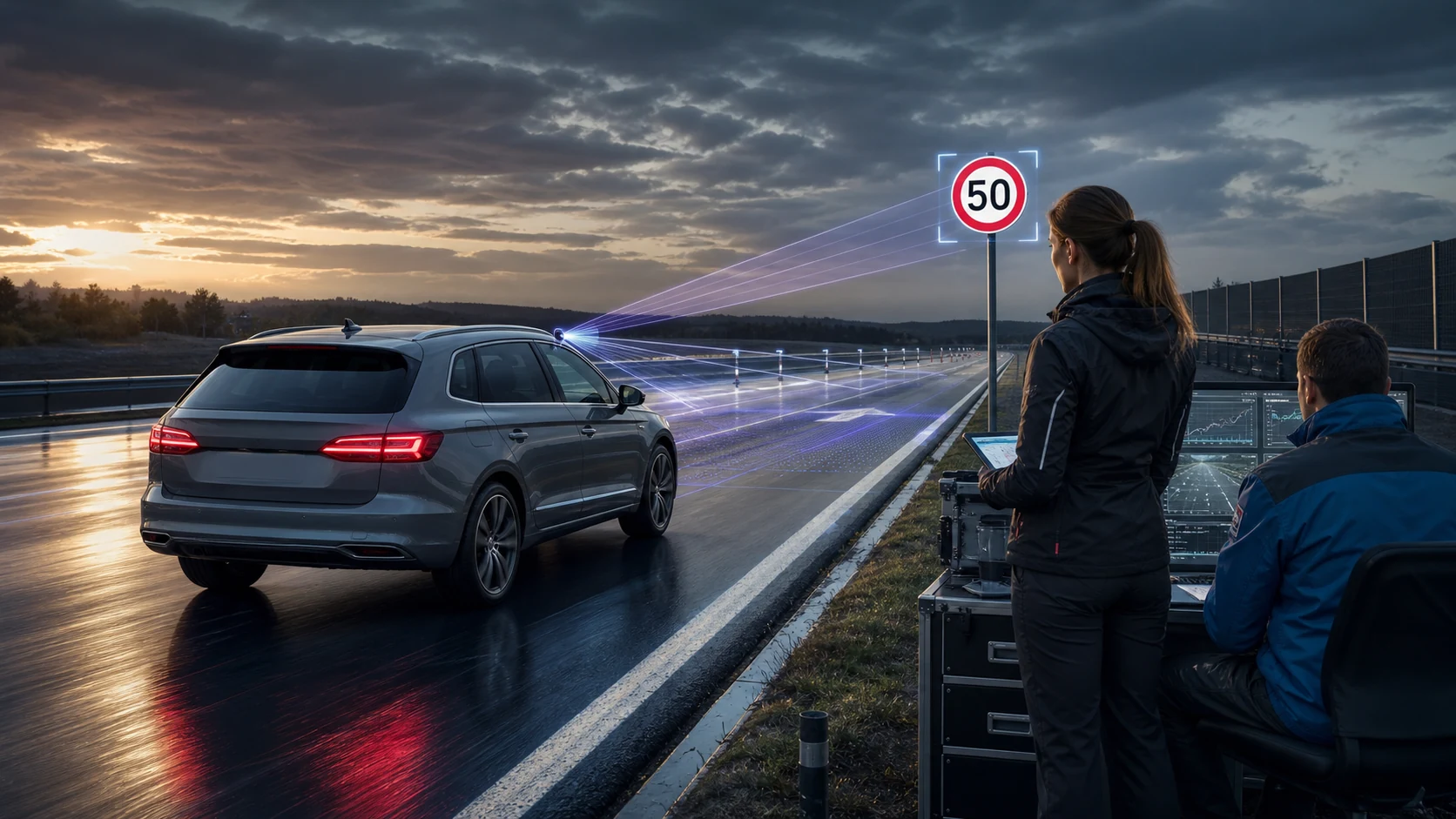
ISA uses sensors and software to help a vehicle comply with speed limits. A camera detects traffic signs while GPS data is updated continuously. This information is sent to the vehicle computer, which can use it to adjust the vehicle’s speed and help prevent the applicable limit from being exceeded.
Components and Operation
- Camera System: detects road signs.
- GPS Receiver: provides location-based speed-limit data.
- Central Processing Unit: processes the data received and controls the vehicle’s speed.
- Interface: provides feedback to the driver and allows the system to be adjusted manually.
The following video provides a practical overview of how ISA operates.
How ISA WorksHas ISA Mapping Been Completed for Türkiye?
Based on the information available to us, two providers have completed the necessary work on mapping Türkiye. OEM vehicle manufacturers can integrate the solutions of these providers and offer an operational system in their vehicles.
However, according to the information available to us so far, ISA technology for Mercedes-Benz Sprinter vehicles for M2–M3 vehicle conversions must be installed externally by the manufacturer. This reflected the information available on 29 April; the article will be updated if the position changes. Products will be obtained from the relevant suppliers so that vehicle tests can be carried out. We provide engineering solutions for these applications.
ISA Operating Issues in Türkiye
In Türkiye, some manufacturer-integrated ISA systems may operate incorrectly because of mapping data and the form of road signs used in Türkiye. ISA systems configured around the European road-sign environment covering the 27 countries referred to in Regulation (EU) 2021/1958 may operate incorrectly in Türkiye because the country uses different sign variants.
Differences in speed limits, sign appearance and vehicle category can cause these issues. The article anticipates that software updates will address them over time. Manufacturers that actively support the Turkish market can provide the system in a configuration that operates correctly in Türkiye.
ISA Approval in Second-Stage Bodywork Type-Approval
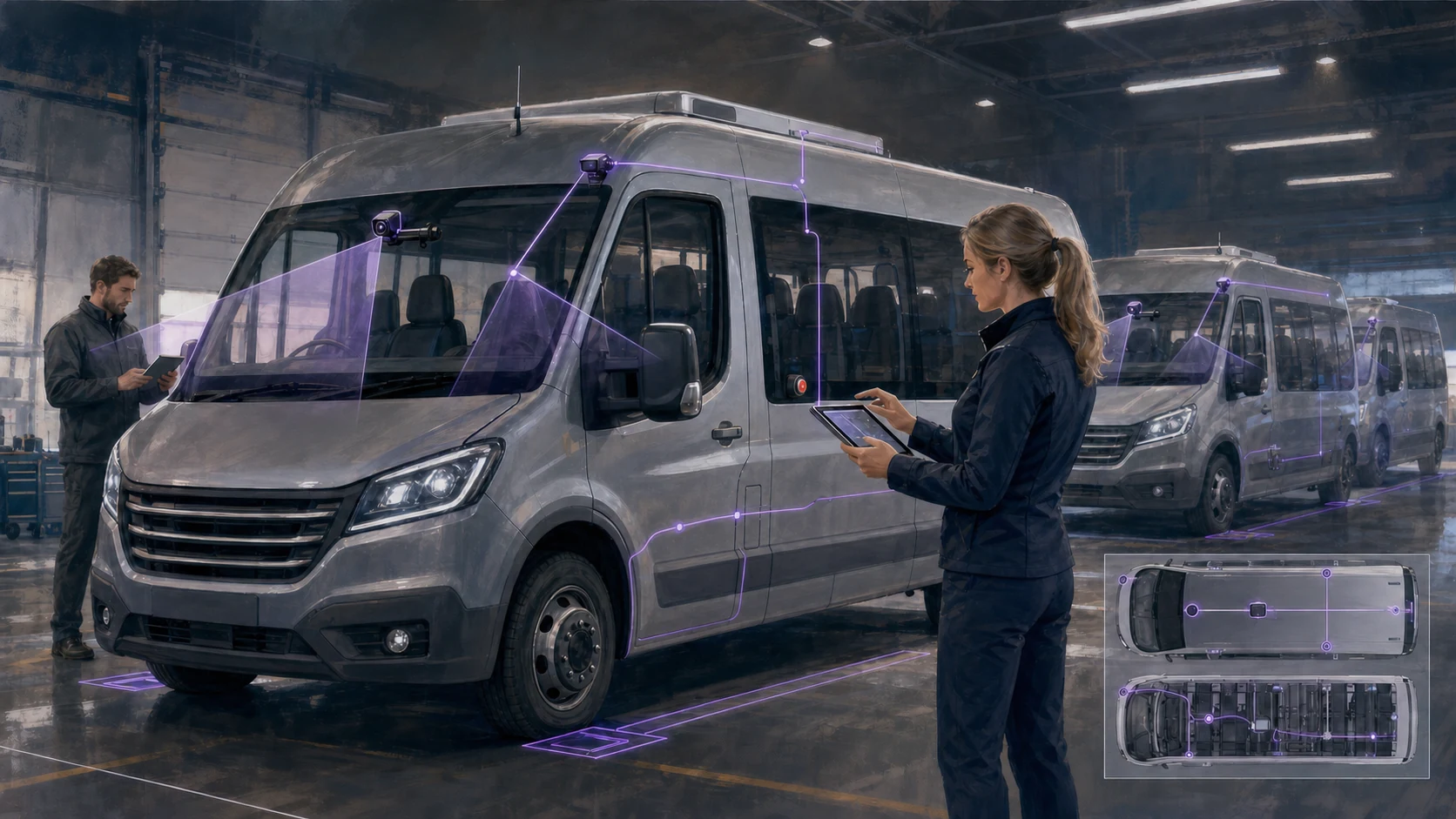
In Türkiye, second-stage bodywork type-approval is commonly used for the production of M2- and M3-category buses. As noted above, systems required on the base vehicle are standard equipment on some vehicles, while on others they must be installed and approved by the bodybuilder. This work must therefore be addressed during approval. For some incomplete N2 vehicle groups, the system may be excluded where a compatibility issue specific to Türkiye has been identified.
ISA is standard equipment in many vehicle groups, while other applications require work by the bodybuilder. We have developed solutions for these cases and can manage the corresponding approval process from initial assessment through completion.
Contact us about our second-stage bodywork type-approval solutions and arrange a project assessment.
Summary
ISA is an intelligent speed-support system that helps the driver recognise the applicable speed limit and maintain an appropriate speed. This article examines how the system operates, its relationship with GSR II and its application across vehicle categories. The article also covers What Is Intelligent Speed Assistance (ISA)?, Which Vehicles Require ISA? and Which Regulations Govern Intelligent Speed Assistance?.