
COP Processes

The process continues after type approval.

Maintaining the approved characteristics throughout production is as important as obtaining type approval. COP provides the systematic framework for managing conformity of production. Anemon Engineering supports manufacturers with preparation and ongoing process management.

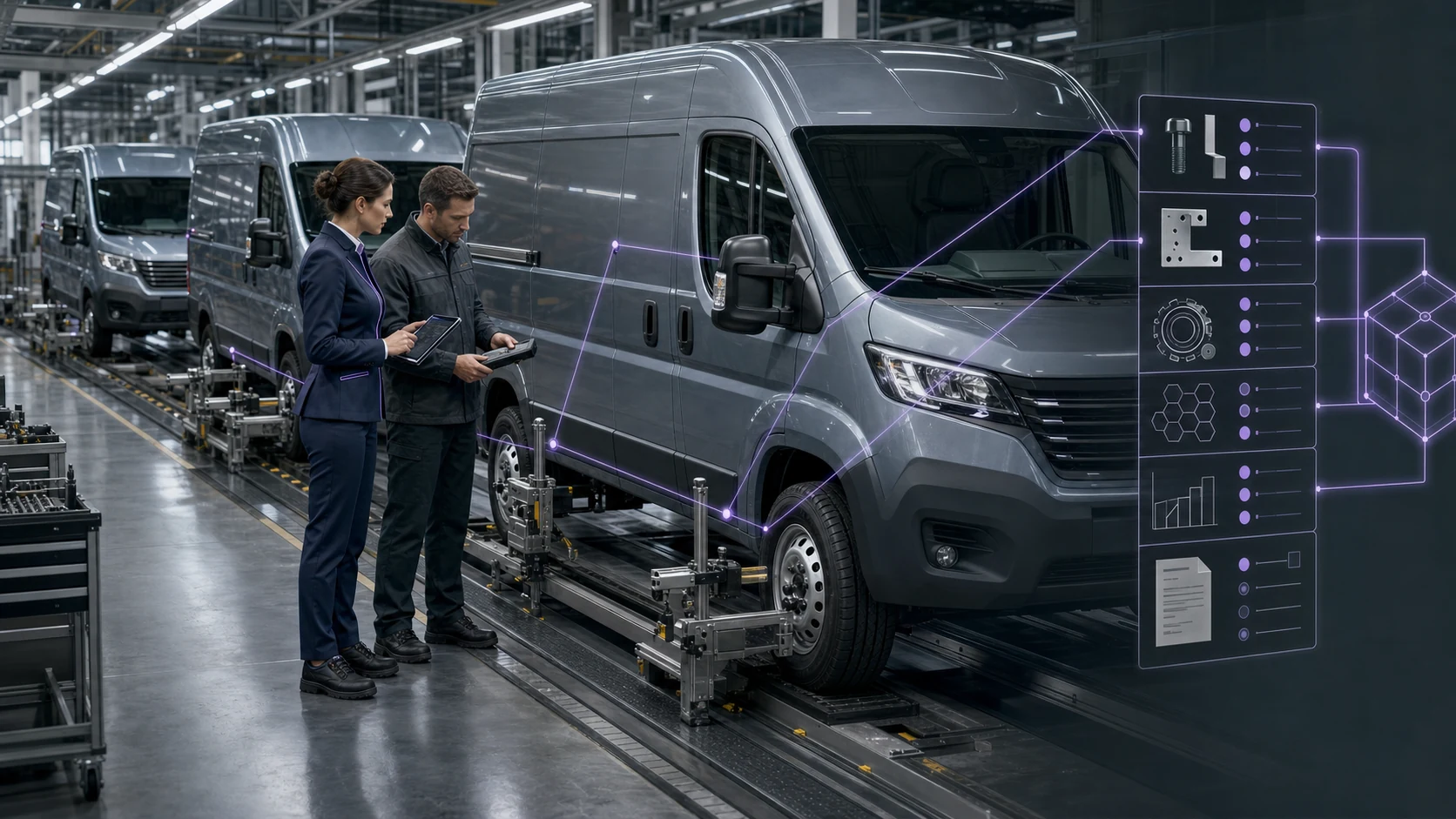
CoP repeatability check of mounting points, component identity and production records across three identical vehicles

Why conformity of production matters?

COP means ensuring that a type-approved product continues to be manufactured in accordance with its approved technical characteristics. Initial approval is important, but the manufacturer’s ongoing responsibility is to preserve that configuration throughout series production. Conformity of production is the operational continuity of type approval.

In practice, COP brings together quality controls, control plans, production records, technical-file alignment, supplier management, product changes and traceability. Manufacturers must demonstrate that the approved configuration can be reproduced not only in an approval sample or initial batch, but throughout subsequent production.

Anemon Engineering treats COP not as generic quality consultancy, but as a manufacturer responsibility directly connected to the continued validity of type approval and homologation. The objective is to establish a sustainable link between the approved product, its technical file and actual production.

A process as critical as type approval itself.

Product Consistency

COP is centred on maintaining the approved technical configuration throughout production. Seemingly minor changes to parts, processes or suppliers can affect conformity. Manufacturers must therefore keep the relationship between the approved technical file and actual production under continuous control.

Traceability

Conformity of production requires traceability of each product to its batch, suppliers, inspection records and technical version. Weak traceability makes it difficult to manage product changes, field feedback or audit questions with reliable data.

Quality Assurance

COP is not simply a quality-management document; it is a practical quality-assurance approach for maintaining approved product characteristics in production. Production controls, reliable records and clear responsibilities directly affect product integrity.

Process Discipline

Uncontrolled production after type approval can jeopardise product consistency and approval continuity. COP preparation establishes systematic control points, change management, records and responsibilities.

Production Continuity

Certification must not be viewed as applying only to the first product or approval sample. The manufacturer must be able to reproduce the same product to the same technical standard. COP helps preserve that continuity as production volumes and product variants increase.

Market Confidence

For manufacturers entering the European market, securing approval is only part of the task; the approved configuration must also be reproduced consistently. Robust COP preparation demonstrates technical discipline, reliable records and long-term manufacturing capability.

An essential requirement for series manufacturers.

Motor Caravan Manufacturers

For motor caravan manufacturers, COP requires control of interior layout, equipment restraints, installations, mass distribution and manufacturing repeatability. Records and controls must be established from the outset so later vehicles reproduce the approved configuration.

Trailer Manufacturers

Trailer manufacturers must monitor chassis construction, axle and braking systems, lighting, coupling components, dimensions and variants throughout production. COP establishes the evidence system needed to show that every unit matches the technical file.

Agricultural Trailer Manufacturers

For agricultural trailer manufacturers, load capacity, structural design, coupling arrangement, suppliers and product variants can be critical to conformity of production. COP helps ensure that vehicles in service remain aligned with the approved technical configuration.

Bus Manufacturers

For bus manufacturers, system integration, passenger capacity, interior layout, supplier effects and production controls form a broad compliance system. COP preparation ensures that approved characteristics are maintained in these high-responsibility projects.

Component Manufacturers

For component manufacturers, COP requires stable technical characteristics, production controls and traceable records for functions that affect the vehicle. Demonstrating consistent performance across production is essential to technical reliability.

Special-Purpose Vehicle Manufacturers

For special-purpose vehicle manufacturers, equipment, bodywork, electrical systems, duty and manufacturing method can vary from project to project. COP keeps the approved technical scope traceable and repeatable even in low-volume or bespoke production.

The key dimensions of production conformity.

01

Quality Management

The assessment covers the manufacturer’s quality approach, allocation of responsibilities, control points and practices that assure product conformity. Production must be not only feasible, but controlled and sustainable.

02

Documentation

The technical file, production records, control forms, revision history and product-change records are fundamental to COP. Together they make the relationship between actual production and the approved product visible and verifiable.

03

Production Processes

Production line, critical processes, supplier involvement, assembly stages and final inspection are assessed for the product concerned. Standardised processes help maintain the same technical level in every unit.

04

Control Plans

The control plan must define what is checked, how often, by which method and by whom. It is more than an audit document; it translates production discipline into daily operation.

05

Product Traceability

Serial numbers, batch data, supplier records, installed components and production variants must remain traceable. Product tracking provides reliable data for change management and any field action.

06

Technical Conformity

Technical alignment must be maintained between approved product characteristics and actual production output. Changes to dimensions, mass, systems, components, connections or design must be managed against the technical file and approval scope.

Common challenges for manufacturers.

Incomplete Documentation

Missing production records, control forms, technical-file references or revision history create significant uncertainty in COP preparation. Even when the product is correct, the manufacturer needs reliable evidence to demonstrate it.

Insufficient Process Control

Failure to monitor production stages, control responsibilities and non-conformity management can undermine product consistency. Without process control, audit preparation becomes a retrospective exercise in collecting paperwork.

Non-Standardised Production

Producing the same product with different operators, suppliers or methods can introduce technical variation. Without standardised production, maintaining the approved configuration becomes difficult and long-term market confidence may be affected.

Missing Inspection Records

Performing checks is not enough; results must be recorded in a traceable, understandable form that can be presented when required. Incomplete records make it difficult to demonstrate process discipline.

Uncontrolled Product Changes

Uncontrolled changes to components, materials, processes, suppliers or design can break the link between the technical file and production. Change management is therefore one of the most critical elements of COP.

Late COP Preparation

Leaving COP preparation until after type approval creates avoidable time pressure. If control plans, documentation, records and responsibilities are not designed from the outset, the system becomes difficult to establish retrospectively.

Sustainable production depends on reliable records.

For COP, documentation is more than an orderly file. Production records, inspection results, revision history, technical-file references, supplier data and product traceability show how conformity is controlled in practice.

If control plans and records do not reflect actual production, the system exists only on paper. Anemon Engineering links documentation to shop-floor practice so controls remain usable and sustainable.

Documentation and traceable production records for COP

Making COP processes manageable.

01

Current-State Analysis

The current production structure, links to the technical file, record system, control points and traceability approach are assessed. This reveals strengths and gaps relevant to COP preparation.

02

Process Assessment

Production stages, quality controls, supplier effects, product variants and change management are reviewed process by process to identify the critical points affecting conformity.

03

Documentation Review

The technical file, production records, control forms, revision documents and supporting evidence are reviewed for consistency. Gaps and disconnected records are incorporated into a corrective project plan.

04

Control-System Development

Control plans, responsibilities, record fields and follow-up logic are designed around the product and production system. The control structure must be practical for the manufacturer, not merely theoretical documentation.

05

Conformity-of-Production Preparation

The process defines how approved characteristics are preserved in production, which records provide evidence and how changes are controlled. This forms the basis for continued type-approval validity.

06

Audit Preparation

Before a COP audit or process review, documentation, records, responsibilities and shop-floor readiness are assessed. The aim is a planned process rather than last-minute preparation.

07

Process Improvement

Gaps in records, control steps, responsibilities or change management are improved in a way that fits actual production. Improvements must be sustainable in daily operation.

08

Long-Term Support

Ongoing support covers product variants, supplier changes, new production lines, technical-file updates and post-approval activities. COP is a living process, not a one-off exercise.

Two essential parts of the same approval lifecycle.

Type Approval

Type approval is the stage in which the product is defined, tested and prepared for approval against specific technical requirements. It establishes the product’s technical identity, which must then be maintained throughout production.

COP

COP demonstrates that subsequent production maintains the same technical configuration and control discipline as the approved product. It reinforces type-approval continuity throughout the manufacturing lifecycle.

Do not leave COP preparation until the final stage.

  • Conformity of production is designed from the outset alongside type-approval preparation.
  • Control plans, records and responsibilities are defined before production begins.
  • The link between the technical file and actual shop-floor practice is maintained.
  • Audit readiness no longer depends on last-minute paperwork.
  • Product changes and variants become easier to manage predictably.

Early COP preparation aligns type approval with the product lifecycle. Once control plans, production records and change management are embedded on the shop floor, audits become more predictable, product changes easier to manage and approval continuity more robust.

Quality-control assessment environment for COP and conformity of production

Products continue to evolve after approval.

Over a product’s manufacturing life, suppliers may change, variants may be added, processes improved and the technical file updated. COP prevents these changes from progressing without control.

Conformity of production is therefore more than an audit topic; it is a technical management tool for the product lifecycle. Type approval establishes the technical baseline, while COP ensures that baseline is maintained in production.

Frequently asked questions about COP and conformity of production.

After type approval, production continuity, documentation and the control system must be managed together.

COP stands for Conformity of Production. It is the structured process used to ensure that a type-approved product continues to match its approved technical characteristics throughout production.

Conformity of production means maintaining the approved technical configuration, control discipline and traceable records throughout series production. It is fundamental to continuity after type approval.

COP audits assess whether the manufacturer can reproduce the approved product, operate the required controls, retain records and manage changes effectively.

Yes. New manufacturers should address COP at an early stage. Retrofitting production controls, documentation, control plans and traceability later makes the process considerably more difficult.

For motor caravan manufacturers, layout, equipment restraints, mass distribution and repeatability affect product conformity. COP preparation helps preserve the approved configuration in later production.

For trailer manufacturers, chassis, axle and braking systems, lighting, dimensions and coupling components must be monitored through production controls. COP manages this technical continuity.

For component manufacturers, technical function, manufacturing method, inspection records, supplier effects and traceability are assessed together. The objective is consistent technical performance from every unit produced.

Documentation provides the evidence base for conformity of production. Without technical-file references, inspection records, revision history and change records, a manufacturer may be unable to demonstrate control reliably.

The quality system puts COP into daily practice. Control steps, responsibilities, records and non-conformity management become an operational system rather than isolated requirements.

COP should be planned alongside type-approval preparation. Early planning makes controls, documentation, product traceability and audit readiness more predictable.

Yes. Type approval is not the end of the process. Product changes, variants, supplier effects, production controls and records must continue to be managed after approval.

Anemon Engineering supports current-state analysis, process assessment, documentation review, control-system development, conformity-of-production preparation, audit readiness, process improvement and long-term follow-up.

A dependable technical partner for production conformity.

Dependable COP support goes beyond producing quality documents. It requires an integrated understanding of product configuration, the technical file, shop-floor reality, control points and post-approval responsibilities. Anemon Engineering approaches conformity of production as part of long-term homologation and type-approval continuity.

For vehicle, motor caravan, trailer, agricultural-trailer and component manufacturers, the objective is a practical system that keeps production aligned with the approved technical configuration. This makes audit preparation, product changes and long-term approval continuity easier to manage.

Let us assess your COP process.

Let us define the technical support and roadmap required for your conformity-of-production process.