Agricultural Trailers
Trailer projects for agricultural transport and field operations require capacity, coupling structure, product purpose and production repeatability to be assessed together.

Production and approval of agricultural equipment require the applicable technical requirements to be assessed correctly. Anemon Engineering supports type-approval projects for S-category agricultural implements and equipment.
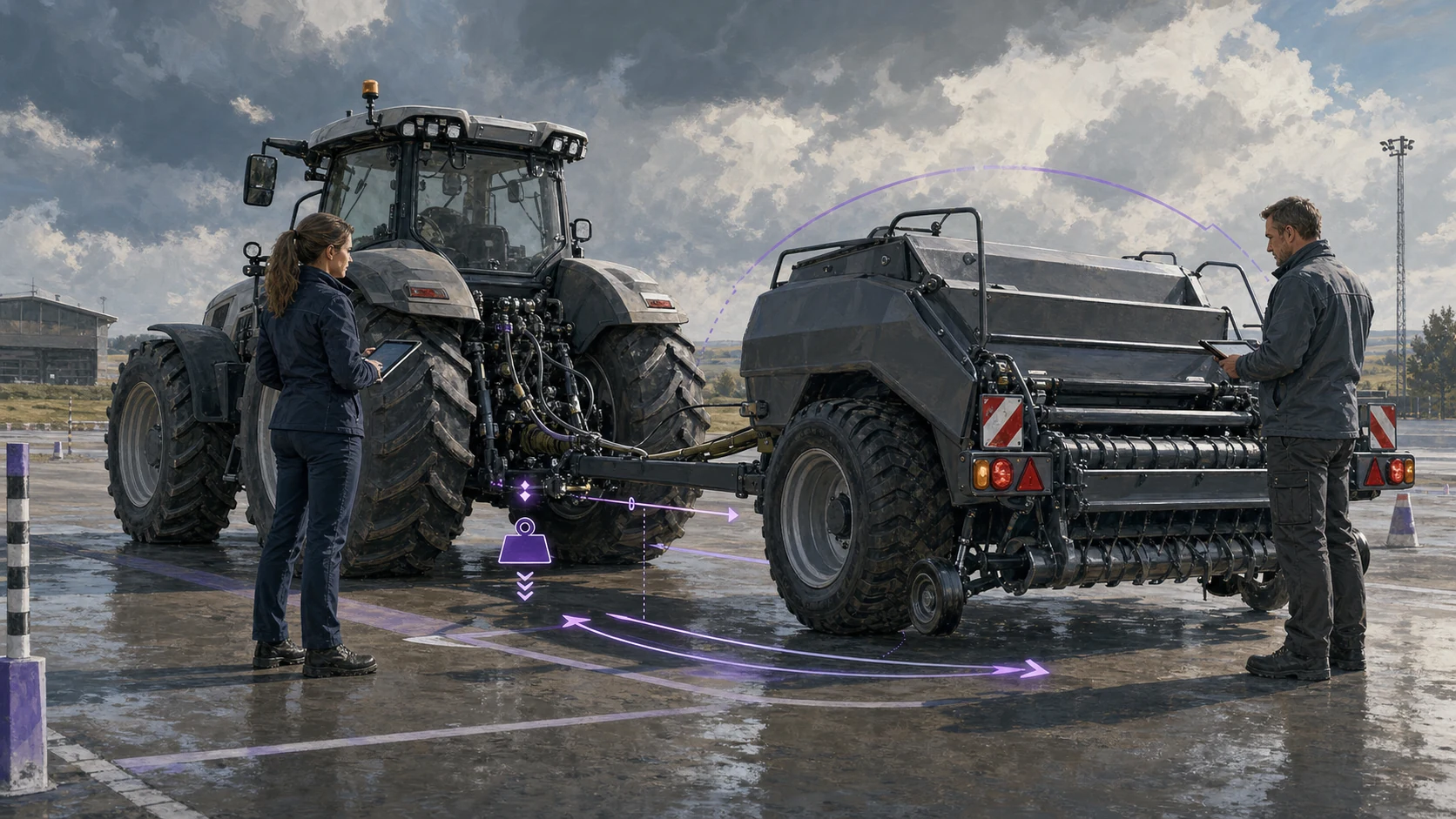
Category S concerns the technical treatment of certain towed or interchangeable equipment used in agriculture and operated with a tractor. Field performance alone is not sufficient; the technical definition, production method and documentation structure must also align with the approval process.
For agricultural-equipment manufacturers, intended use, towable configuration, coupling arrangement, weight effects, product variants and production controls must be assessed together. Because each item has different technical characteristics, product-specific pre-assessment is essential.
Anemon Engineering helps manufacturers of S-category agricultural implements and interchangeable towed equipment manage product development, technical-file preparation and the approval application in a structured manner.
Trailer projects for agricultural transport and field operations require capacity, coupling structure, product purpose and production repeatability to be assessed together.
For towable equipment operating with a tractor, the use scenario, coupling points, weight effects and technical definition must be set out clearly.
For specialised equipment that does not fit a standard product family, function, operating environment and technical limits are analysed project by project.
For harvest-support equipment, field use, moving parts, transport configuration and documentation requirements are planned together.
For equipment that distributes fertiliser, liquids or other materials, tanks, hoppers, couplings and operational effects must be represented accurately in the technical file.
For equipment used to transport materials and products on farms, strength, loading conditions, traceability and production control are important.
Intended use, operating conditions, coupling arrangement, weight effects and structural decisions form the technical basis of the approval process.
When drawings, explanations, product data and supporting documents do not reflect production reality, the need for clarifications and revisions increases.
Where a product family includes different variants, their management must be planned from the outset.
When type-approval preparation is disconnected from the production line and supplier structure, product continuity and traceability are weakened.
Application scope, technical evidence and assessment stages must be considered alongside product-development decisions.
Production-control arrangements must be established early so that later units retain the same technical characteristics as the approved product.
If product dimensions, mass data, coupling details or component definitions are unclear, the technical file becomes less reliable.
If production implementation is not made traceable through drawings, explanations and supporting evidence, the process may be prolonged.
Beginning type-approval preparation after the product is complete increases the likelihood of design revisions and repeated work.
If variants, component changes or production updates are not managed within the approval framework, inconsistencies may arise.
Even if a single product performs successfully, series production requires controls and records to maintain the same standard.
For manufacturers entering new markets, product consistency and technical-file quality are central to commercial readiness.
The technical file defines an S-category agricultural-equipment project and the information supporting it. Bringing product descriptions, drawings, technical data, supporting documents and traceability records into one structure gives greater control over both the application and production continuity.
The product’s intended use, category approach, technical-data maturity and approval readiness are assessed together before application.
Equipment structure, coupling arrangement, production method, variants and field operating conditions are reviewed from a technical perspective.
A practical process is established based on the target market, production plan, product family and documentation maturity.
Drawings, explanations, product data and supporting documents are consolidated into a coherent technical-file structure.
Revisions, product changes, supplier information and application documents are maintained in a traceable structure.
Application stages, authority communications, technical clarifications and the required document flow are managed in a structured manner on the manufacturer’s behalf.
After approval, production controls and record-keeping are strengthened so that the approved product configuration can be maintained.
Technical support is provided for new variants, product updates, target-market changes and documentation revisions.
For export-focused manufacturers, product functionality alone is not sufficient. The product family must be defined consistently, the technical file must be dependable, production discipline must be traceable and changes must remain manageable.
This preparation gives manufacturers greater predictability in new-market discussions and approval procedures. Anemon Engineering assesses the product, process and documentation together.
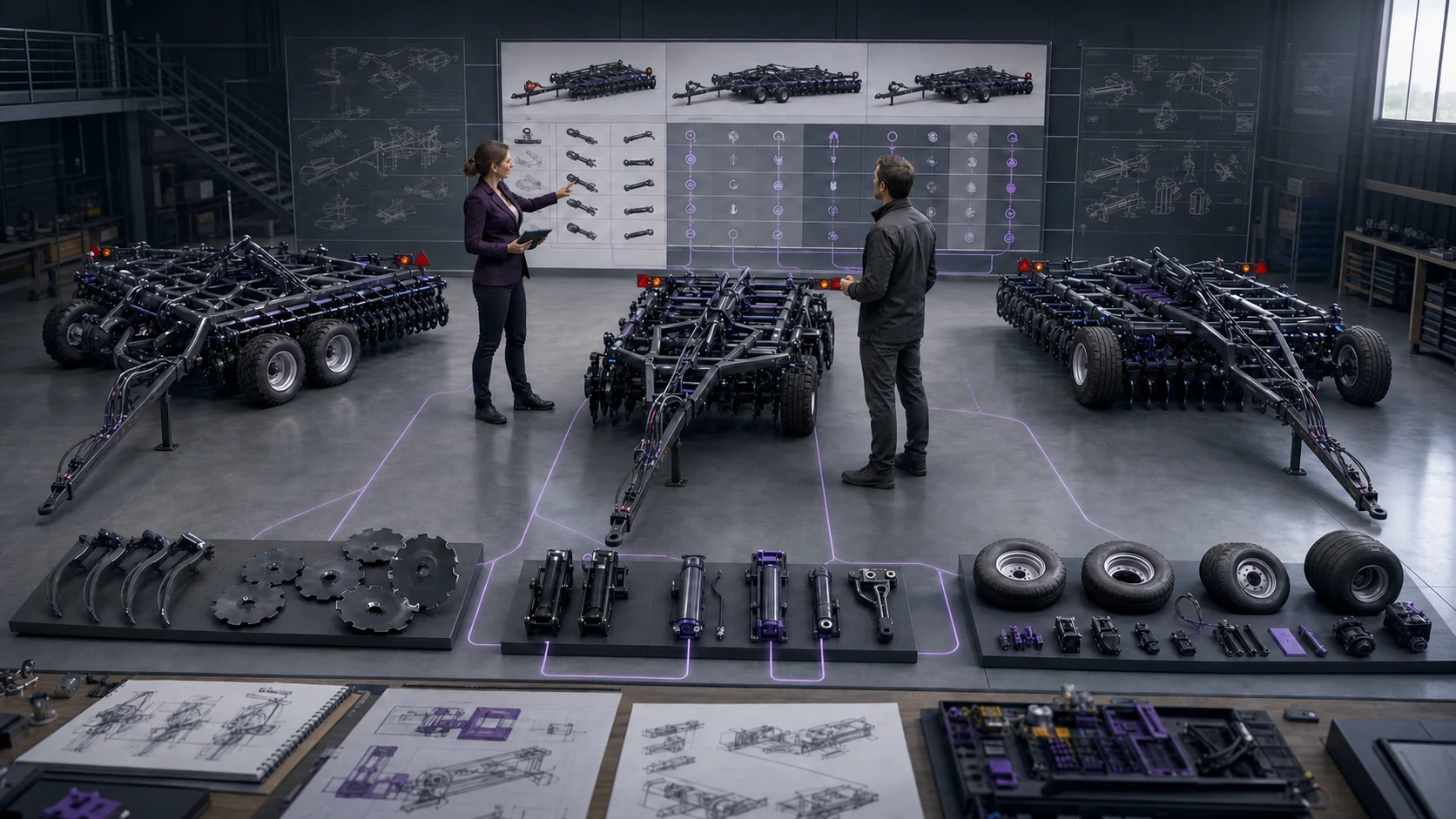
Even within one agricultural-equipment family, intended use, operating conditions, weight distribution, coupling arrangement and production method may vary. These differences affect technical-file structure, application strategy and conformity-of-production preparation.
Experience means identifying these differences early and establishing a roadmap that prevents manufacturers from losing time to unnecessary revisions.
Machine function, towable configuration, product variants and technical-file requirements are considered together.
For field equipment, intended use, coupling arrangement, production method and conformity evidence are assessed for the specific project.
For trailer manufacturers, product families related to S-category equipment and complementary procedures can also be planned.
For first-time manufacturers, the product structure, production infrastructure and documentation standard must be established from the outset.
For manufacturers preparing for new markets, technical-file quality, production discipline and product consistency are critical.
Early technical analysis reduces process risk for specialised equipment outside standard product families.
These answers provide general information; the scope and process requirements of each product must be assessed separately.
Category S relates to the technical assessment of certain towed or interchangeable equipment used in agricultural activities and capable of operating with a tractor. The applicable scope must be determined separately for each product.
S-category type-approval preparation addresses the product’s intended use, technical structure, documentation and production repeatability.
Project-specific technical assessments can be provided for agricultural trailers, towable equipment, special-purpose implements, harvest-support equipment, distribution equipment and transport equipment.
Manufacturers must manage product development, technical files, application strategy, test preparation, conformity of production and export readiness at the same time.
The technical file is the core structure that defines how the product will be assessed through its description, drawings, technical explanations, supporting evidence and traceability records.
Conformity of production means being able to continue manufacturing the product after approval with the same technical configuration and control approach.
Yes. For export-focused manufacturers, product consistency, technical-file quality, production discipline and target-market readiness are assessed together.
Yes. For new manufacturers, early planning of product structure, production infrastructure, documentation maturity and application strategy makes the process more predictable.
The process should be planned while design and production decisions are being made, not after the product is complete. Late preparation increases the risk of technical revisions and lost time.
Anemon Engineering provides preliminary technical assessment, product analysis, type-approval strategy, technical-file preparation, documentation management, application coordination, conformity-of-production preparation and post-approval support.
For agricultural-equipment manufacturers, Anemon Engineering addresses not only the application stages but also technical decisions, documentation structure, conformity-of-production readiness and continuity after approval. The objective is to help the manufacturer bring a controlled, traceable and market-ready product into production.
Let us define the technical support required for your S-category type-approval project.