
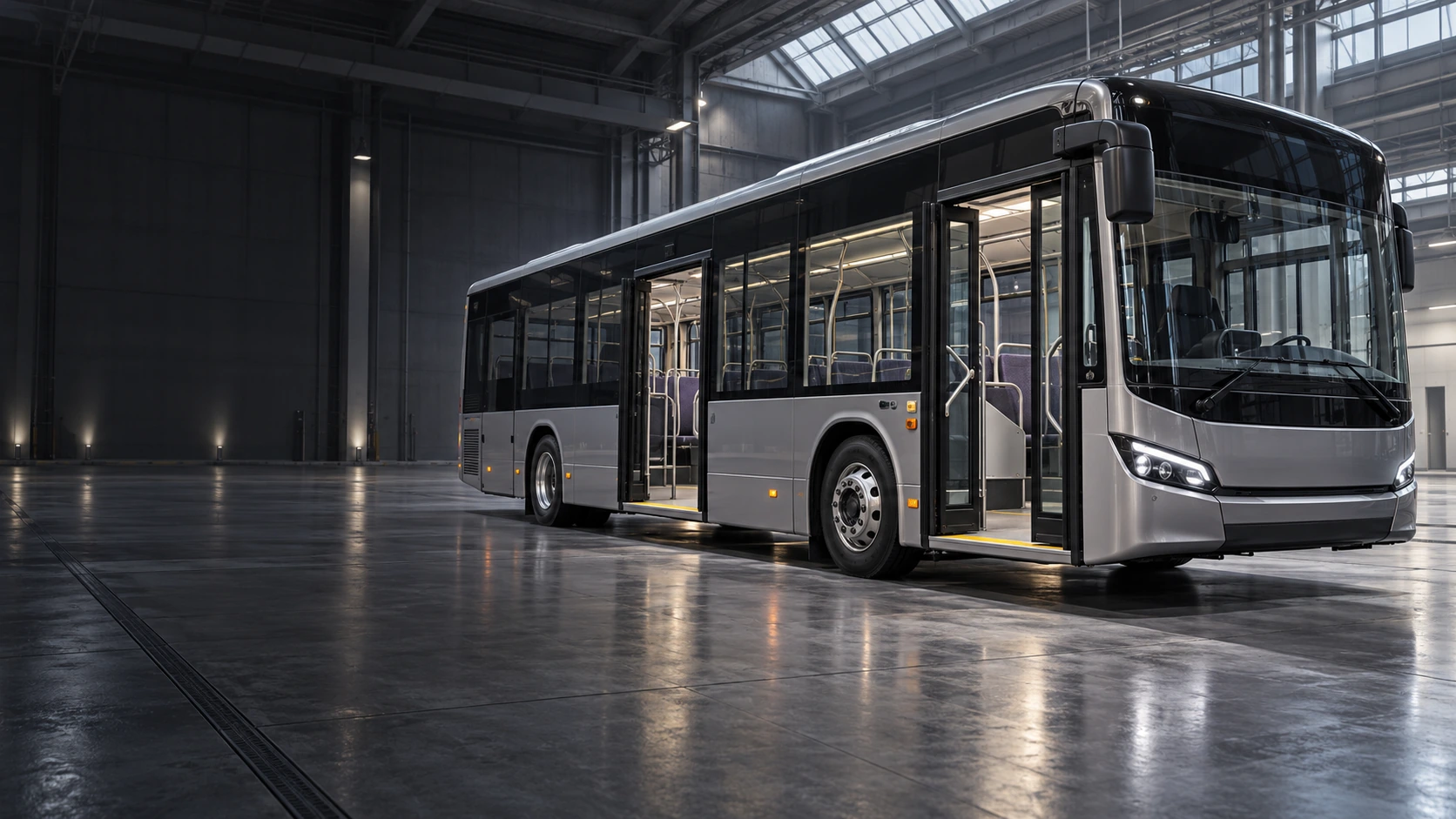
Plan doors, gangways and passenger space together
Changing a seating or door layout can affect more than the altered part. Give bodybuilders, accessibility specialists and homologation staff the same R107 edition for reviewing the complete arrangement.
Construction and access in one review
Examine bus construction, passenger access and emergency exits together.
Context for the project team
Use dated RegsUP notes and manufacturer questions in technical discussions.
One file at the 11/S1 level
Buy the 215-page English edition without a platform subscription.
What does the RegsUP edition include?
The UN R107 11/S1 regulatory text is accompanied by RegsUP guidance dated 11 October 2026, manufacturer questions and supporting source extracts. The English file contains 215 pages in total.
- Regulatory text and relevant annexes
- RegsUP guidance dated 11 October 2026
- Manufacturer questions and supporting extracts
- Fixed PDF edition personalised for the order
Official regulatory text is available free of charge. The RegsUP edition brings that text, dated explanations, manufacturer questions and supporting extracts into one identified working file personalised for your order.
Buy the PDFEnglish PDF · 11/S1 · One-off purchaseFile, licence and delivery details
The purchase covers the selected PDF edition. Delivery follows payment confirmation and order release. Platform access, later editions and individual consulting are separate services. Changing the store language does not translate the PDF.
RegsUP is the regulatory platform from Anemon Innovation. This article introduces its related PDF product.
Which part of bus approval does R107 address?
UN R107 concerns approval of M2 and M3 vehicles with regard to general construction. Passenger space, doors, exits and access need to be considered together. The relevant provisions depend on vehicle class, arrangement and use; one layout solution cannot simply be transferred to every bus.
Make the layout change visible in the drawing
Anemon recommends starting with one current vehicle-layout drawing. Show seats, doors, circulation space and the access solution at the same revision. Matching dimensional records and supplier documents to that configuration helps everyone understand which arrangement is under review.
When considering another row of seats, for example, look beyond the capacity figure. Bring its effects on passenger movement, exits and the relevant access arrangement into the technical discussion. This is an illustration of a design-review approach, not an exhaustive regulatory checklist.
R107 is one part of the bus programme
Superstructure rollover strength, seats and material burning behaviour are covered by separate regulations. This R107 PDF is not a package of those other publications. That distinction helps you choose a reference for the actual question you need to resolve.
Edition and guidance date
The offered product is a 215-page English PDF at the 11/S1 level. Its RegsUP explanations are dated 11 October 2026. The cited base text provides technical background and is not presented as the same edition as the product. Check the official text and transition conditions applicable to the application separately.
Sources and edition references
These official sources document the technical framework and publication history. Their text levels are distinguished from the offered RegsUP edition.
- UNECE · UN R107 Revision 9 — base construction and access framework
- UNECE · published R107 texts and amendments
- UNECE · Agreement and regulation status
Add the UN R107 PDF to your project reference
Choose the English 11/S1 edition to work with the text and RegsUP guidance together. Check the current store price and complete your single-PDF purchase.
Buy the PDFEnglish PDF · 11/S1 · One-off purchase