
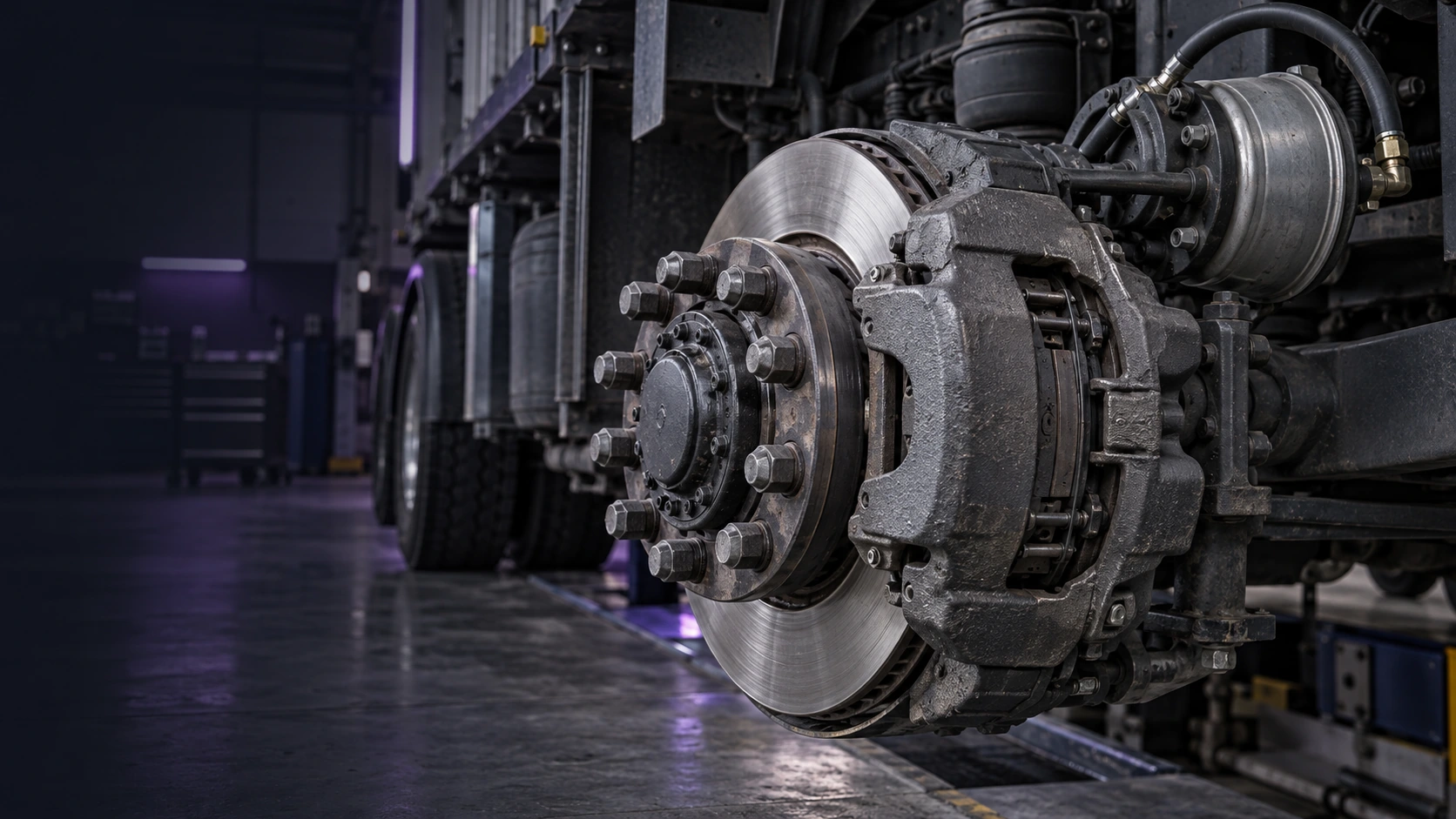
Review the braking system and its interfaces
A component report does not describe the complete braking system installed on a vehicle. Give brake suppliers and homologation staff a shared R13 reference for discussing system scope and evidence.
System and test scope together
Review braking performance, pneumatic systems and stability in the same reference.
Read the conditions behind the answers
Consult manufacturer questions and supporting source extracts.
An identified 397-page reference
Keep the 15/S2 edition and dated RegsUP guidance in project records.
What does the RegsUP edition include?
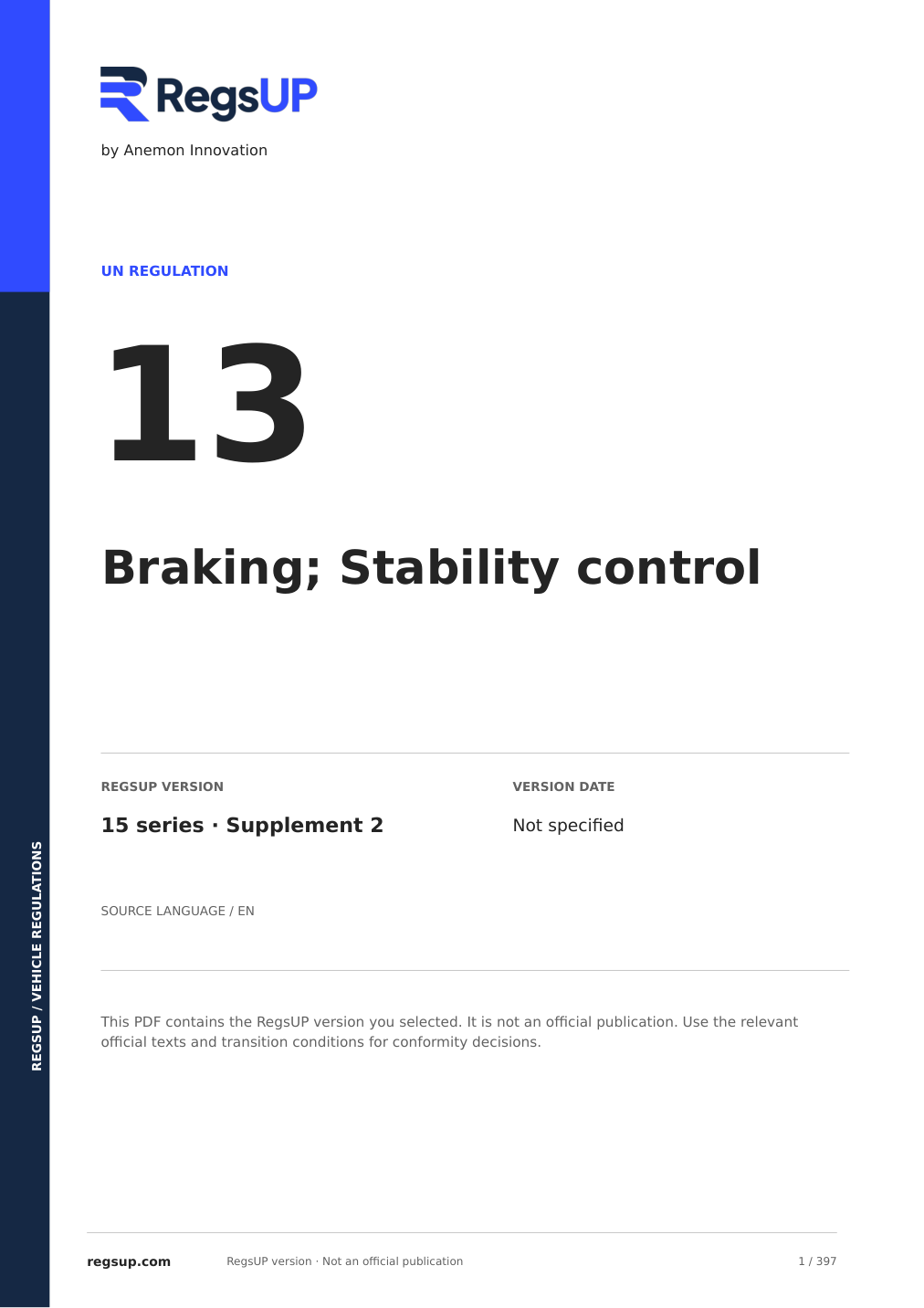
The UN R13 15/S2 regulatory text is accompanied by RegsUP guidance dated 11 October 2026, manufacturer questions and supporting source extracts. The English file contains 397 pages in total.
- Regulatory text and relevant annexes
- RegsUP guidance dated 11 October 2026
- Manufacturer questions and supporting extracts
- Fixed PDF edition personalised for the order
Official regulatory text is available free of charge. The RegsUP edition brings that text, dated explanations, manufacturer questions and supporting extracts into one identified working file personalised for your order.
Buy the PDFEnglish PDF · 15/S2 · One-off purchaseFile, licence and delivery details
The purchase covers the selected PDF edition. Delivery follows payment confirmation and order release. Platform access, later editions and individual consulting are separate services. Changing the store language does not translate the PDF.
RegsUP is the regulatory platform from Anemon Innovation. This article introduces its related PDF product.
Start the R13 review with the vehicle scope
UN R13 is a central reference for braking assessment of heavy vehicles and trailers. Vehicle category, system design and the type of application determine which provisions need review. R13 and R13-H are separate regulations; choose the document by scope rather than the word “braking” alone.
From the component report to the vehicle system
Keep brake circuits, fitted equipment, vehicle configuration and the variants covered by reports in a single project record. This is Anemon’s suggested approach to organising an engineering review. Using the same brake component does not automatically establish equivalent coverage for a different vehicle configuration.
If axle layout or vehicle masses change, for example, first document the effect on the existing braking evidence. Compare the systems described by the supplier declaration, test report and approval certificate. Identify the unresolved technical question before carrying a conclusion across to the modified configuration.
How can you use the 15/S2 edition?
The 397-page English PDF brings together regulatory text, RegsUP explanations, manufacturer questions and supporting extracts. It provides a defined working reference when braking engineers and approval teams review a provision together and record the edition used.
Separate the edition level from acceptance conditions
15/S2 describes the offered publication. RegsUP guidance dated 11 October 2026 is separate from legal entry into force. The cited base text explains the technical framework; the series and transition conditions accepted for an application need their own verification. Purchasing a PDF does not constitute vehicle approval.
Sources and edition references
These official sources document the technical framework and publication history. Their text levels are distinguished from the offered RegsUP edition.
- UNECE · UN R13 Revision 9 — base technical framework
- UNECE · published R13 texts and amendments
- UNECE · Agreement and regulation status
Add the UN R13 PDF to your project reference
Choose the English 15/S2 edition to work with the text and RegsUP guidance together. Check the current store price and complete your single-PDF purchase.
Buy the PDFEnglish PDF · 15/S2 · One-off purchase